

Medical Laboratory Technology [DMLT]
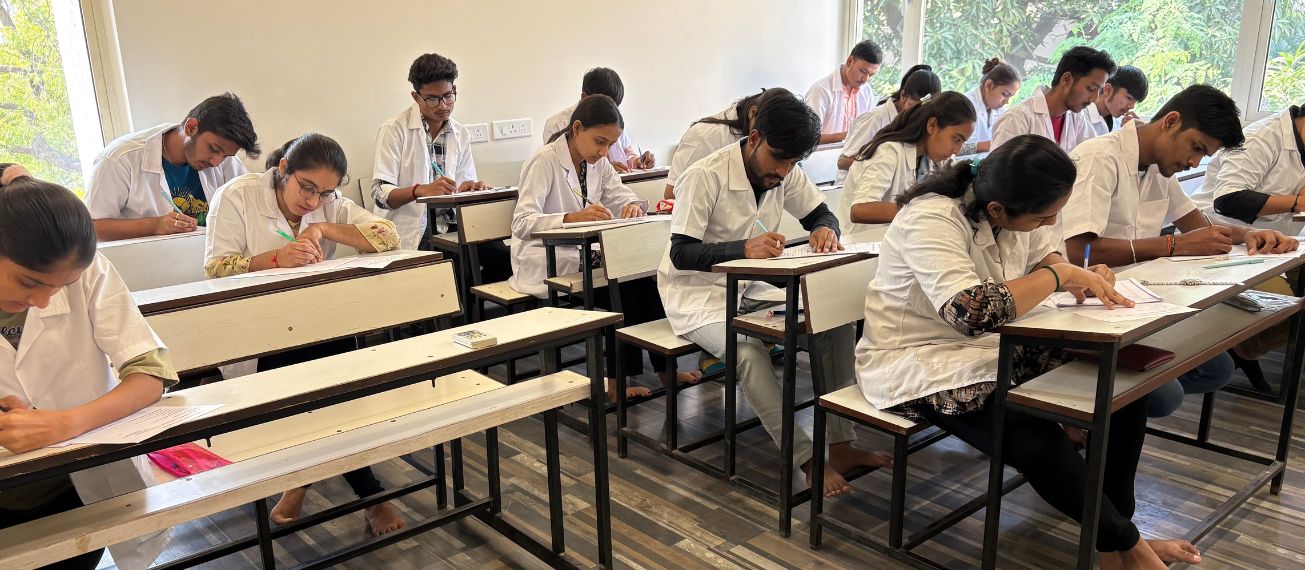
The Diploma in Medical Laboratory Technology (DMLT) equips aspiring healthcare professionals with the expertise and practical skills to become effective lab technologists in hospitals, diagnostic centres and healthcare facilities. This career-oriented program delves into the core areas of laboratory science including specimen collection, biochemical and hematological testing, microbiology, immunology, instrumentation and quality assurance.
Students will gain hands-on training in modern laboratory techniques, work with advanced diagnostic equipment, and learn how to interpret test results and maintain high standards of accuracy and safety. Given the growing demand for diagnostic services in India and globally, a DMLT qualification opens up versatile opportunities in pathology labs, research institutions, public health organisations and clinical settings. With Vihaan Education Society’s strong infrastructure, clinical tie-ups and experienced faculty, you’ll step confidently into a laboratory-based healthcare career.
Module 1: Foundations of Laboratory Science
- Introduction to Medical Laboratory Technology: roles and responsibilities
- Human Anatomy & Physiology – Part I
- Basics of Biochemistry: Principles & Laboratory Methods
- Introduction to Hematology: Blood Cells, ESR, Haemoglobin
- Medical Terminology & Laboratory Documentation
- Laboratory Safety, Hygiene & Bio-hazard Management
Module 2: Core Diagnostic Techniques
- Human Anatomy & Physiology – Part II and Pathology Basics
- Advanced Biochemical Analysis: Enzymes, Metabolites, Automatic Analyzers
- Microbiology – Culture Techniques, Antibiotic Sensitivity, Sterilization
- Immunology & Serology: Antigens, Antibodies, Rapid Tests
- Clinical Hematology: Coagulation, Blood Banking, Automated Counters
- Computer Applications & Laboratory Information Systems (LIS)
- Hands-On Session: Specimen Handling & Quality Control
Module 3: Specialized and Clinical Laboratory Practice
- Histopathology & Cytology: Tissue Processing, Slides, Staining
- Clinical Biochemistry Advanced: Hormones, Tumour Markers, Automation
- Diagnostic Microbiology – Parasitology, Mycology, Molecular Basics
- Clinical Hematology Advanced: Flow Cytometry, Bone Marrow, Haemostasis
- Public Health Diagnostics: Epidemiology, Outbreak Testing, Community labs
- Internship I: Real-world placement in diagnostic and pathology labs
Module 4: Professional Development & Capstone Practice
- Laboratory Management & Administration: Staff, Inventory, Compliance
- Quality Assurance & Accreditation Standards (NABL, ISO)
- Research Methodology & Data Interpretation in Diagnostics
- Career Development: Employability Skills, Resume Building, Interview Prep
- Final Internship/Capstone Project: Independent Lab Task, Reporting & Assessment
- Applicant should have completed Class 10th or 12th from a recognised board.
- Physically and mentally fit to undertake laboratory-based practical training.
- Minimum required aggregate marks as specified by the institution.
Related Courses
Courses You May Like
Diploma
CMS & ED
The Diploma in Community Medical Services & Essential Drugs (CMS & ED) is designed to empower learners to deliver primary …
Diploma
Dialysis Technician
The Diploma in Dialysis Technician program at Vihaan Education Society is designed to prepare students to become skilled professionals in …
Diploma
Nursing Assistant Diploma
At Vihaan Education Society, our Diploma in Nursing Assistant is a comprehensive programme crafted to prepare students for a professional …
X-Ray & Radiography Technology [XRT]
The Diploma in X-Ray & Radiography Technology is tailored for students who wish to enter the dynamic and high-demand field …
Operation Theatre Technology [OT Assistant]
The Diploma in Operation Theatre Technology (OT Assistant) is a focused paramedical programme designed to prepare students for the critical …

We understand the importance of your bright career. Want to learn more?